Permesso di Soggiorno vs Visa: What Is the Difference?
People use these two words like they mean the same thing. They don't. A visa gets you into Italy, a permesso di soggiorno lets you stay, and mixing them up can cost you your legal status.
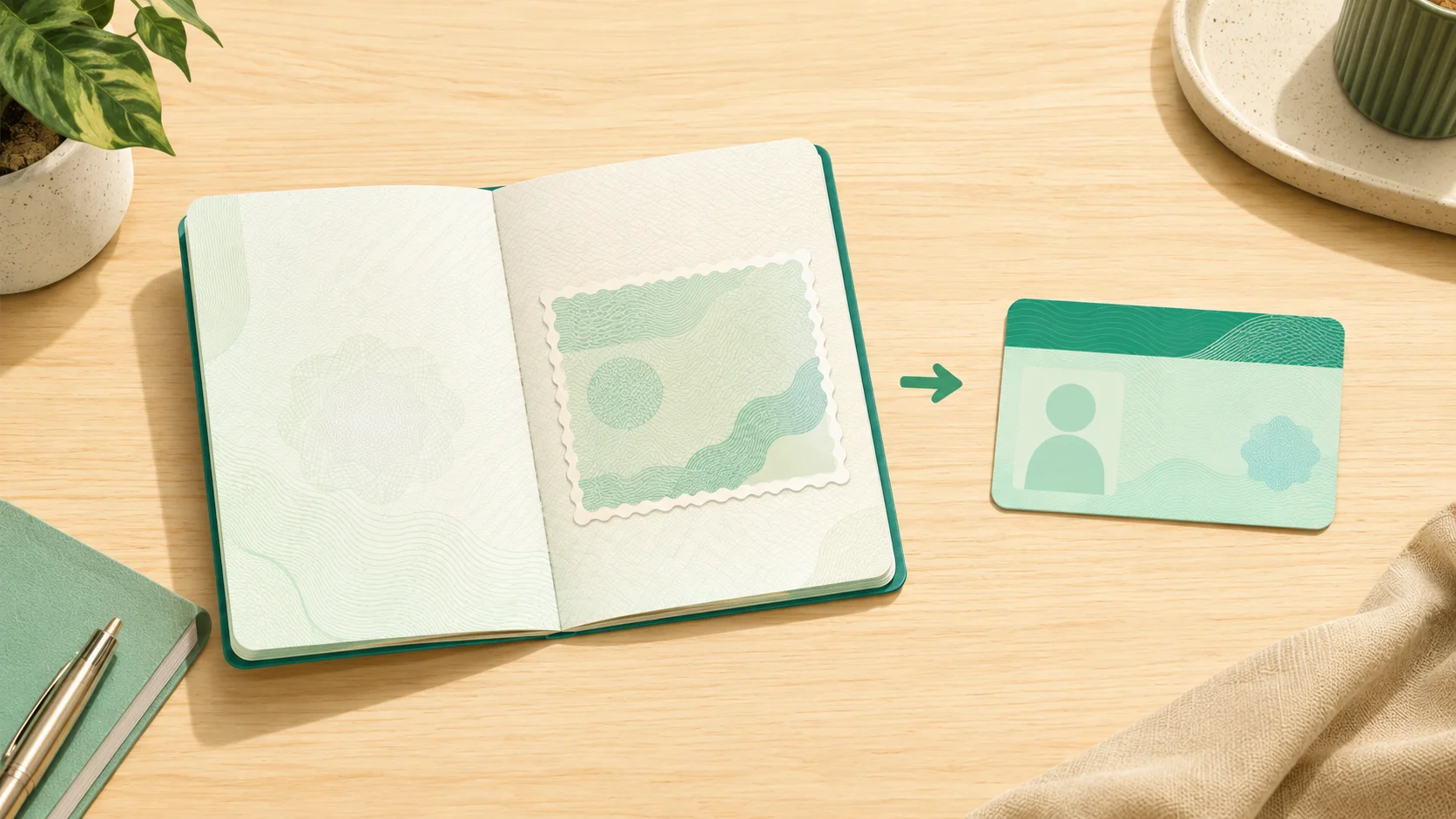
"Visa" and "permesso di soggiorno" get thrown around like they're the same thing. They aren't. They're two different documents, from two different offices, at two different points in your move to Italy. And the most common mistake, assuming your visa is enough to live here, is also the most expensive one. It can quietly turn you into an overstayer while your visa still looks valid in your passport.
Here's the short version. A visa gets you into Italy. A permesso di soggiorno lets you stay. For a long stay you need both, in that order, and there's a tight deadline between them that a lot of people miss.
Let me lay it out properly.
The difference in one table
| Visa (visto) | Permesso di soggiorno | |
|---|---|---|
| What it does | Lets you enter Italy | Lets you stay in Italy |
| Where you get it | Italian consulate in your home country | Inside Italy, after you arrive |
| When | Before you travel | Within 8 working days of arriving |
| Who issues it | Italian embassy or consulate | The questura (immigration police) |
| Covers | Entry, and short stays up to 90 days | Long stays over 90 days |
What a visa actually is
A visa (visto in Italian) is your entry document. You apply for it at the Italian embassy or consulate in your home country, before you fly, and it goes into your passport as a sticker. It's permission to arrive at the Italian border and be let in. That's the job it does. By itself it does not give you the right to live here for the long term.
Two types matter for most people.
The short-stay Uniform Schengen Visa (Type C) covers up to 90 days. Tourism, visiting family, a short business trip. With a Type C you don't apply for a permesso at all. Instead you file a dichiarazione di presenza, a simple declaration of presence, and you leave before your 90 days run out.
The long-stay National Visa (Type D) covers stays over 90 days. Work, study, family reunification, elective residence, and so on. This is the visa that leads to a permesso. If you're moving to Italy rather than visiting, this is almost certainly the one you have.
What a permesso di soggiorno is
The permesso di soggiorno is issued inside Italy, after you arrive, by the questura, which is the immigration branch of the state police. It's the document that makes your long stay legal. Every non-EU citizen staying more than 90 days needs one. It arrives as a biometric card, a bit like an ID card, and you renew it before it expires.
There's a naming trap here worth clearing up. "Residence permit" is the usual English translation, but it's really a permit to stay. It is not the same as residenza anagrafica, which is registering your home address with your comune. Those are two separate things at two separate offices. You can hold a permesso and still not have registered your residenza. Don't assume one covers the other.
How they fit together
The sequence is what matters, so hold onto this order.
Visa first, from the consulate, while you're still abroad. Then you travel to Italy. Then, within 8 working days of arriving, you start your permesso application. You don't renew the visa later. Once you're in the system, you renew the permesso, and the visa has done its one job.
The application itself starts at a Poste Italiane post office, where you pick up the official kit, fill it in, and submit it. You get a receipt with an appointment at the questura, where they take your fingerprints. The card comes later. Your first permesso is tied to the reason on your visa, so a study visa gives you a study permesso. You can convert it to a different type down the line, for example from study to work.
Which situation are you in?
Three common cases:
- Short stay, under 90 days (tourism or a short visit): you need the visa or visa-free entry only. No permesso. File a dichiarazione di presenza if you're asked to.
- Long stay, over 90 days (work, study, family): you need both. A Type D visa to get in, then a permesso di soggiorno within 8 working days of landing.
- EU or EEA citizen: you need neither a visa nor a permesso. If you stay past 90 days, you register your residenza at the comune instead.
The deadline that catches people out
The 8 working days are counted from the day after you arrive, not from when you've found a flat and settled in. This is where people get burned. If you let it slide because you're still getting set up, your stay can be treated as irregular even though your visa was perfectly valid.
The safe move is to apply on time, even if your file isn't perfect yet. Submitting an incomplete application can slow the permit down by months, but missing the deadline entirely is a worse problem than a slow one. Get the kit, submit within the window, and sort out any missing pieces after. There are also some fees involved, a contribution fee that depends on your permit type plus a €16 marca da bollo, so budget a little for that.
Frequently asked questions
Do I need both a visa and a permesso di soggiorno?
For a long stay, yes. The visa gets you into Italy and the permesso lets you stay past 90 days. For a short stay under 90 days you only need the visa. EU citizens need neither.
How long after arriving do I have to apply for the permesso?
Within 8 working days of entering Italy. That clock starts almost immediately, so treat it as one of your first tasks, not something to leave for later.
Is the permesso di soggiorno the same as residency?
No. The permesso is your permit to stay in the country. Residenza anagrafica is registering your address with your local comune. They're separate steps at separate offices, and you may need both.
Do I renew my visa or my permesso?
Your permesso. The visa is a one-time entry document. After you're in Italy, everything runs through renewing the permesso di soggiorno before it expires.
What to do next
Once the visa-then-permesso sequence makes sense, the rest of your setup falls into place. One thing to handle right alongside it is your codice fiscale, which you'll need before you can open a bank account or sign a lease. We walk through that in how to get your codice fiscale in Italy.
And if any term here was new to you, each one has its own plain-English page in the glossary. Start with the document you need first, and Italian bureaucracy gets a lot less frightening.
What to actually say
Italian phrases with audio for the conversation this paperwork leads to.
Related posts
When Should You Renew Your Permesso di Soggiorno? The New 90-Day Rule (2026)
Since 22 May 2026 the law says file your renewal 90 days before expiry, not 60. The police website still says 60. Here are the three dates that matter.

Prenota Facile: How to Book Your Questura Appointment Online (2026)
Italy's police now run an online booking portal for many residence permit appointments. Here's what it covers, and how to use it.
First Things to Do When You Arrive in Italy (a Newcomer's Checklist)
Just moved to Italy and don't know where to start? This is your checklist, the first things to do and the order to do them in, from your codice fiscale to healthcare. Each step links to a full guide.